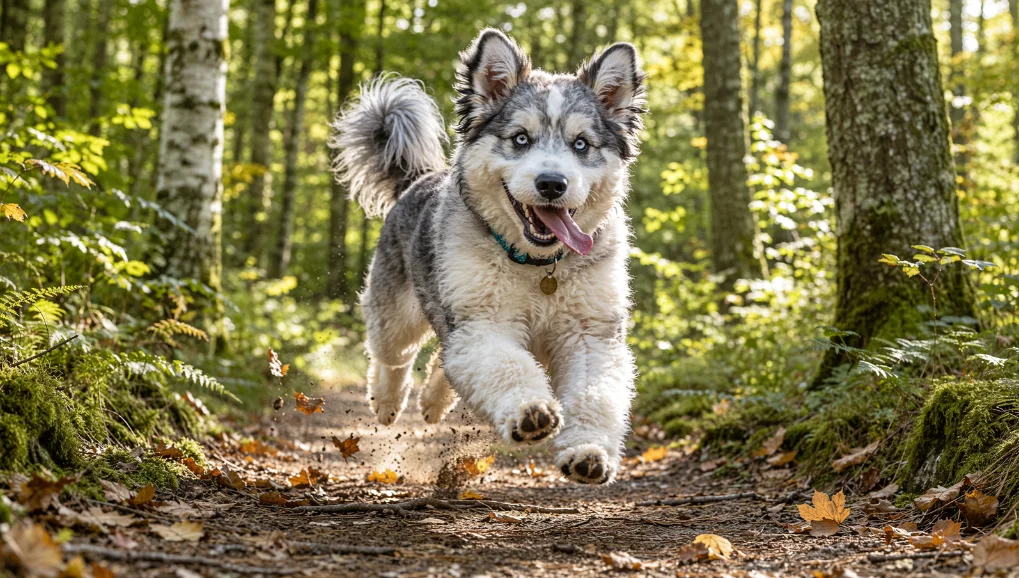
A husky poodle mix combines two athletic, intelligent dogs with quite different coats and personalities. You may also hear this cross called a Huskydoodle, Huskypoo, Siberpoo, or Poosky. The result can be affectionate and clever, but individual dogs often vary more than buyers expect.
This mix usually suits active owners who enjoy training, exercise, and regular grooming. It is less predictable than an established purebred because either parent can influence size, coat, behavior, and shedding. Understanding that uncertainty matters more than choosing a puppy for appearance alone.
Quick answer: A Huskydoodle is a cross between a Siberian Husky and a Poodle, usually a Standard Poodle. Adults are often medium to large, energetic, intelligent, and people-oriented. Their coats may be straight, wavy, or curly, so grooming and shedding can differ greatly between individual dogs.
Huskydoodle Quick Facts
| Trait | What U.S. Owners Can Expect |
|---|---|
| Parent breeds | Siberian Husky and Poodle |
| Common names | Huskydoodle, Huskypoo, Siberpoo, Poosky |
| Typical size | Usually medium to large |
| Common weight range | Often around 35–70 pounds |
| Energy level | High |
| Coat | Straight, wavy, or curly |
| Shedding | Low to heavy, depending on genetics |
| Training | Intelligent but sometimes independent |
| Family fit | Often best for active households |
| Lifespan | Commonly reported around 10–15 years |
| AKC recognition | Not recognized as a standardized AKC breed |
Key Takeaways
- Huskydoodles can inherit traits from either parent, so puppies are not highly predictable.
- Many need substantial daily exercise plus mental stimulation.
- A curly coat may shed less, but no dog is guaranteed to be hypoallergenic.
- Grooming needs can be significant, especially with dense or curly coats.
- Early training and socialization are especially useful for energetic young dogs.
- A securely fenced yard can help owners manage roaming or chasing tendencies.
- Health screening of both parent dogs matters when choosing a breeder.
What Is a Husky Poodle Mix?
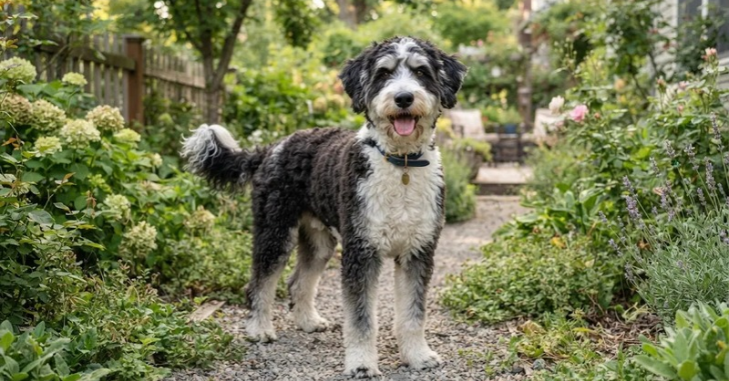
A husky poodle mix is produced by crossing a Siberian Husky with a Poodle. Standard Poodles are commonly used, although some crosses involve smaller Poodles. There is no single breed standard controlling the appearance or temperament of these dogs.
The Siberian Husky was developed as an endurance sled dog and remains highly active. The American Kennel Club lists adult Huskies at roughly 35 to 60 pounds. It also describes them as energetic dogs with a strong desire to run.
Standard Poodles are also active dogs, despite their polished show-ring image. AKC information lists adults at more than 15 inches tall and roughly 40 to 70 pounds. Poodles are also known for trainability, athletic ability, and water-retrieving history.
Those parent traits explain why Huskydoodles can look and behave differently from one another. One puppy may have tighter curls and strong responsiveness to training. Another may inherit heavier shedding, independence, or more pronounced running instincts.
How Big Do Huskydoodles Get?
Adult size depends heavily on the Poodle parent and the puppy’s inherited traits. Crosses involving a Standard Poodle commonly mature into medium or large dogs. Current breed guides often place many adults somewhere around 35 to 70 pounds.
Height can also vary because there is no fixed standard for the cross. A Standard-Poodle-based dog will usually be taller than one produced with a Miniature Poodle. Owners should ask for the actual size of both parents instead of relying on a breeder’s label.
Growth predictions are especially uncertain during puppyhood. Large paws or a thick coat can make a young dog look bigger than its eventual frame. Parent size, sex, nutrition, and genetics provide better clues than appearance alone.
What Is Their Temperament Like?
Most owners should prepare for an intelligent dog with considerable energy. Both parent breeds have working backgrounds, although they can approach training differently. The Poodle often brings responsiveness, while the Husky may contribute independence and curiosity.
Many Huskydoodles enjoy spending time with their families and participating in activities. They may enjoy hiking, structured play, training games, and other active routines. Bored dogs may create their own entertainment through chewing, digging, vocalizing, or escape attempts.
Temperament still varies from dog to dog. Genetics, early socialization, training, daily routine, and previous experiences all shape behavior. Meeting the puppy’s parents can provide useful clues when that option is available.
How Much Exercise Do They Need?
This cross usually needs more activity than a casual walk around the block. Both parent breeds are athletic and can remain energetic well into adulthood. A combination of physical exercise and mental work usually produces better results than exercise alone.
Useful activities can include brisk walks, controlled running, hiking, retrieving games, scent work, and obedience practice. Puzzle feeders and short training sessions can also occupy an active mind. Puppies need age-appropriate exercise because their developing bodies should not be overworked.
A fenced space can help, but a yard does not replace interaction. Huskies have a well-documented instinct to run and may chase smaller animals. Secure fencing and leash control therefore deserve serious attention.
Are Huskydoodles Easy to Train?
They are usually capable learners, but intelligence does not always mean automatic obedience. A dog with stronger Poodle traits may enjoy repeated training tasks. A dog with more Husky-like independence may understand a command yet lose interest quickly.
Positive reinforcement usually provides the clearest path for everyday training. Keep sessions short, reward the behavior you want, and increase distractions gradually. Consistency across family members also helps prevent confusing rules.
Recall training deserves special attention because roaming instincts can be strong. Even a well-trained dog may become distracted by wildlife or an interesting scent. Use secure areas while building reliable responses.
Grooming and Coat Care
Coat type is one of the least predictable features of this cross. Some dogs develop loose waves, while others have dense curls or a straighter double coat. The grooming schedule should match the individual coat instead of the breed label.
Curly and wavy coats can mat when loose hair stays trapped near the skin. Regular brushing and professional trimming may become part of the routine. Straighter coats can shed more noticeably, especially if the Husky’s dense undercoat is inherited.
Check behind the ears, under the collar, around the legs, and near the tail for tangles. Nails, ears, and teeth also need routine attention. Starting grooming early can make handling less stressful as the dog becomes larger.
For more pet-care coverage, readers can explore NewSprien’s broader Pets section. NewSprien Pets section: Owners with multiple animals may also find the site’s veterinary-focused cat care article useful. Cat health guide on NewSprien
Do Huskydoodles Shed or Cause Allergies?
Some dogs from this cross shed less than a typical Siberian Husky. That outcome is more likely when a dog inherits a Poodle-like coat. It is still impossible to guarantee coat type from the cross’s name alone.
Low shedding also does not mean allergy-free. The American College of Allergy, Asthma & Immunology says all dogs produce allergens. Those allergens occur in dander, saliva, hair, and urine.
People with dog allergies should avoid assuming that any Doodle will solve the problem. Allergy specialists report that so-called hypoallergenic dogs can still trigger symptoms. Spending time with the individual dog before adoption can provide more useful information.
Health Issues Owners Should Discuss With a Veterinarian
Mixed ancestry does not make a dog automatically free from inherited disease. Responsible breeders should consider the recommended health testing associated with both parent breeds. Buyers should ask for documented results rather than accepting broad claims about “hybrid vigor.”
The Siberian Husky’s national breed recommendations include hip and ophthalmologist evaluations. The breed club also recommends testing related to specific inherited neurological conditions.
Poodles can have their own inherited health concerns, depending on their size and family line. A veterinarian can also advise on weight, dental care, parasite prevention, vaccines, and age-specific screening. Preventive care should continue throughout the dog’s life.
Watch for changes in appetite, movement, energy, breathing, skin, or behavior. Any persistent change deserves veterinary attention rather than an online diagnosis. The same practical approach applies across household pets and supports responsible ownership.
Is a Husky Poodle Mix Good for Families?
A husky poodle mix can fit family life when the household has enough time for exercise and training. Active families may appreciate the dog’s playful nature and interest in shared activities. Families seeking a quiet, low-maintenance companion may find the workload demanding.
Supervision around young children remains sensible with any energetic medium or large dog. Excited dogs can accidentally knock over smaller children during play. Children should also learn how to respect a dog’s food, resting areas, and boundaries.
Other pets require individual assessment. A dog that inherits stronger Husky prey drive may chase cats or smaller animals. Careful introductions and early management can reduce problems, but genetics still matter.
The American Veterinary Medical Association advises families to match a dog’s needs with their home and lifestyle. Exercise access, work schedules, other pets, grooming, and future housing should all be considered.
How to Choose a Breeder or Adoption Option
Avoid choosing a puppy because of blue eyes, unusual markings, or promises about coat type. A responsible breeder should discuss temperament and health with the same enthusiasm as appearance. You should also be able to ask about both parent dogs and their health screening.
Be cautious with guarantees such as “completely hypoallergenic,” “never sheds,” or “perfect temperament.” Mixed dogs can inherit many combinations of parental traits. Responsible sellers should explain uncertainty instead of hiding it.
Adoption is another option worth checking. Local shelters and Poodle or Husky rescues sometimes receive mixed dogs that resemble this cross. An adult dog can also offer more information about final size, coat, energy, and behavior.
NewSprien readers can browse the site’s wider lifestyle coverage for household and everyday living topics. NewSprien lifestyle coverage: Before bringing home any dog, discuss the decision with everyone who will share daily care.
Who Should Consider a Huskydoodle?
This dog can be rewarding for an owner who enjoys activity and regular training. It may suit runners, hikers, experienced dog owners, or families with time for structured exercise. A willingness to manage grooming is equally important.
The cross may be less suitable for people away from home for long periods. It can also challenge owners seeking a predictable coat or a guaranteed low-energy temperament. Apartment living is possible for some individuals, but daily exercise remains essential.
Focus on the actual dog rather than the designer name. Ask about behavior, health, parentage, coat maintenance, and previous training. A good lifestyle match matters more than fashionable markings
Frequently Asked Questions
What is a Husky and Poodle cross called?
Common names include Huskydoodle, Huskypoo, Siberpoo, and Poosky. These names generally refer to the same type of cross. None represents a standardized AKC-recognized breed.
How long do Huskydoodles live?
Current breed references commonly estimate a lifespan around 10 to 15 years. Individual longevity depends on genetics, size, health, weight, and veterinary care. Parent breeds themselves also have different expected lifespan ranges.
Do Huskydoodles shed a lot?
Some shed lightly, while others can shed much more. Coat inheritance determines the difference, so siblings may even have different grooming needs. A Poodle-like appearance does not guarantee a low-shedding adult coat.
Is a Husky Poodle mix hypoallergenic?
No dog can be guaranteed hypoallergenic. Allergy organizations explain that dog allergens come from proteins in dander, saliva, hair, and urine. People with allergies should speak with an allergist before adding a dog.
Are Huskydoodles good for first-time owners?
They can work for committed first-time owners who expect an active training schedule. Their exercise, grooming, and possible independence can create a steep learning curve. Puppy classes and professional guidance can make the transition easier.
Can a Huskydoodle live in an apartment?
Some can adapt if their exercise and stimulation needs are consistently met. Space alone does not determine whether a dog will thrive. Noise, activity level, access to outdoor areas, and time alone also matter.